Ideas That Start Ripples

Leadership insights, real-world stories, and values-based perspectives shaping schools, communities, and nations. Every ripple begins with a conversation. This is where ours continue.

Leadership Assessments

Schools today are stretched thin. Teachers juggle curriculum demands, testing requirements, behavior challenges, parent communication, and limited time. Administrators are navigating staffing shortages, accountability metrics, and increasing expectations from every direction. So when someone says, “We need to better prepare students for life after graduation,” the instinctive response is: With what time? And with what program? The good news is this: preparing students for life doesn’t mean adding another initiative. It calls on us to adopt a different way of applying and utilizing what we are already doing. The goal is not to fill all the holes. The goal is to align.

Rethinking Student Readiness Beyond Academics

Academic achievement still matters. Students must possess literacy, numeracy, subject mastery, and critical thinking skills. But life beyond graduation requires more than content knowledge. It takes decision-making, resilience, communication skills, problem-solving, and self-leadership. The point is certainly not that schools don’t understand these outcomes. They tend to regard them as quite separate from the academic day. Preparing students for life does not mean starting fresh, adding an overlay layer onto another program block. What that means, in fact, is asking a different question inside established structures:

How can this lesson build responsibility?
Where can students practice communication?
What opportunities exist for ownership?
How can reflection become part of the learning process?

By weaving life skills into daily instruction, readiness becomes part of the culture, not a competing priority.

Implementation Reality: Working Within Time Constraints
Time is the most protected resource in education. Without something else being removed, teachers cannot realistically take on another full initiative like this. In other words, integration is more important than addition. Here’s how schools can prepare students for life without expanding their day:

  1. Add Reflection to Existing Assignments

Rather than developing fresh projects, include short reflection prompts within existing projects:
What did you learn about managing your time?
What would you do differently next time?
Where did you show perseverance?
This takes five minutes but builds self-awareness — a life skill that students can use throughout their lives and that is widely transferable.

  1. Shift From Teacher-Led to Student-Owned Moments

Ownership does not require a new curriculum. It requires small shifts:
Let students lead portions of discussions.
Assign rotating classroom responsibilities.
Have students explain their thinking to peers.
These micro-adjustments build confidence and accountability without adding instructional minutes.

  1. Build Communication Into What Already Exists

Presentations, peer feedback and collaboration can be part of current standards. The difference is intentional framing. Rather than only assessing content accuracy, include evaluation of clarity, teamwork, and listening skills. This is not a new initiative. It is a refinement of what is already happening.

Measuring Impact Without Adding Complexity
Measurable impact: This is one of the biggest concerns administrators raise. If we are going to prioritize life readiness, how do we know it’s making a difference? The answer is not another large-scale assessment. It is observable growth. Schools can track impact through:

  • Student self-assessments on growth areas
  • Teacher observations tied to soft skills
  • Reduction in behavioral referrals
  • Increased student participation
  • Improved collaboration during group tasks

When students start taking responsibility for their learning, it can be felt. Classrooms feel different. Conversations deepen. Problem-solving improves. Impact doesn’t always require a new data dashboard. Often, it reflects in tone and ownership within the room.

Aligning Staff Without Overwhelming Them

Staff fatigue is another implementation hurdle. Educators are understandably cautious about new initiatives, as many have seen programs come and go. The trick is to frame this work not as “something new,” but to position it as a clarifier of purpose. Instead of saying, “We are launching a life skills initiative,” put it this way:

  • We are maximizing what we already do.
  • We are strengthening the outcomes of our current instruction.
  • We are preparing students not just for tests, but for decisions.

Professional development can focus on small, actionable strategies teachers can implement immediately — not over a long period of time — so that the strategies are easily implemented. When educators understand that life preparation improves rather than competes with academic performance, buy-in increases.

Building a Culture, Not a Program

Programs have timelines. Culture has consistency. When preparing students for life is integrated into the daily curriculum, it goes from something that seems an extra burden to something that doesn’t feel like an extra burden. It’s the lens through which we view teaching. Cultural shifts happen through:

  • Consistent language about responsibility and growth
  • Modeling resilience during challenges
  • Celebrating effort and progress, not just grades
  • Encouraging reflection after both success and failure

Students learn readiness not through one lesson but through many. When schools repeat the same principles of ownership, communication, and resilience, students internalize them. And importantly, that does not mean you need a new initiative binder. It takes intentionality in moments already present.

The Long-Term Payoff

Graduation is not the finish line. It is a launching point. Students will work in environments that require adaptability, emotional intelligence, teamwork, and initiative. If schools wait for such competencies within separate programs, the work will always feel additional. But life preparation is only sustainable when it is inherent in everyday instruction. Educating students for life beyond graduation is not about adding to an already strained infrastructure. It is about unlocking the full potential of what schools are already doing. Small shifts. Clear alignment. Intentional culture. The result? Students who leave not just with what they know — but what they can use.

Call to Action

If your school needs practical ways to infuse leadership, responsibility, and life readiness into what you are already doing — without overwhelming your team — explore proven curriculum solutions designed for real classrooms.

👉 Learn more at: https://growingleaders.com/curriculum/

“Preparing students for life does not require adding another initiative. It requires aligning what we already do with who students are becoming.”
“Graduation is not the finish line. It is the launching point.”

How Consistency in the Life Of A Student Can Help With Your Education, That is. But Great Gestures Just Don’t Have That Same Effect: The Presence of a Predictable Leader is as Important as the Gestures of a Calm Presence.

In an era that so frequently salutes grand discoveries and overnight success, the soothing and quiet cadences of consistency can feel subtle — or minimized altogether. But, for students, consistency is among the most significant determinants of success. The habits formed on a cycle of daily actions, of finding reliable mentors each semester you come back year after year, of finding routines that operate underneath the surface (those unspoken aspects which make us feel good), are worth more than sporadic successes.

But consistency isn’t the subject of the most clicks. It doesn’t dazzle with surprise. But its efficacy is in what it fosters: resilience, trust, competence, identity. For students trying to tread a fine line between academic rigor and self-development, predictable leadership and consistent presence offer the building blocks for success.

Why Consistency Matters More Than Thunderous Moments.

Take two leaders and their interaction at school. One speaks at the beginning of the year with stirring phrases and bold visions and makes an unforgettable speech. The other shows up at the same time each week, consistently delivering on commitments, following through on what they promised, checking in with students, providing encouragement and listening. Which leader earns trust? Which shapes good character?

Big gestures can be attention-captivating. But they seldom set the stage for permanent development. By contrast, consistency builds trust. When students know someone will always show up, be predictable and be reliable, they are more willing to take risks, learn and grow. That includes teachers, mentors, coaches and even classmates.

Consistency Generates Character And Competence.

It’s a great way to see to it that students develop habits of repetition, ones that are cumulative in nature. A student who reads a few pages each day, does a skill weekly or checks notes each evening doesn’t always experience overnight results — but over weeks and months, their skills grow.

Consistency builds:

Discipline: By getting in your routine – even when motivation is low – you learn self-discipline, not being a slave to the machine, and persistence.

Confidence: Predictable progress leads to a sense of mastery.
Resilience: The steady pressure of learning helps students handle obstacles instead of quitting.
Identity: “I am the sort of person who makes it there” gets to be a part of your brain.

In school, this could resemble habitual revision instead of last-minute cramming. Leadership: it’s coming to meetings and showing up to work with colleagues. Students whose behavior supports consistency are also learning how success is not a single event, but rather a result of continuous work.

Predictable Leadership and Student’s Path.

Students, mentors, coaches, and teachers, and student leaders all have a central role to play in modeling consistency. Predictable leadership changes places. Students see when a leader takes action, who truly cares about people and is steady even when times get tough.

Predictable leadership:

Establishes psychological safety. Students feel secure when everyone knows what is expected of them with an eye on the same end.

Builds community: A leader who shows up is an anchor to others when they can turn to him for support.
Fosters accountability. When leaders consistently model accountability, people start acting that way.
Inspires growth: When backed up by an anchor figure, students take better risks.

Consistency of leadership is not some strict routine. It is about dependability, integrity and trust. Students will forget the speeches that a leader makes to them, but they remember how that leader made them feel, and whether or not they can trust them.

How can these students cultivate consistency in themselves?

There is talk about motivation as the key to a successful performance among students — but that often turns out to be elusive as motivation varies. When motivation doesn’t work, consistency wins. Here’s a good way for students to establish consistent patterns of action:

  1. Start Small and Realistic.

The big goals are motivating, and terrifying. Small, manageable, consistent actions over time — say, allocating 15 minutes a day for reading — are easier to maintain.

  1. Create Anchors.

Relate new habits to your habitual activities. For instance, you review notes immediately after dinner every day and the habit becomes much easier to remember.

  1. Use Accountability Partners.

When students share goals with others who care, consistency builds. Keeping a momentum can be helped with a study buddy, a mentor or a small group.

  1. Track Progress.

Simple calendar checkmarks on a document can signal to oneself that I need to continue working and keep up the effort.

  1. Practice Patience.

Change is gradual. Celebrate small victories, trusting that consistency becomes lasting results.

Consistency Generates Calm Over Chaos.

With deadlines, exams and social pressures to navigate, consistency provides a steady cadence to ground students. Routines don’t remove stress — but they offer some framework for navigating it. Predictable leadership and consistent personal practices transform a student’s experience from reactive to intentional.

Consistency doesn’t ensure shiny wins, or straight wins — but it brings sustained development, stronger relationships and lasting success.

Call to Action.

Do you want to support the coming generation of college students in establishing habits and feeling confident in their leadership roles? Consider the iLead curricula for leadership in long-term effect:

Learn more: https://growingleaders.com/curriculum/

“Consistency doesn’t make headlines — it makes the future.” A student’s development is defined less by big moments than by steady rhythms.”
“Predictable leadership develops trust, confidence, and community.” Students succeed when they have someone they know will show up, consistently.”

Schools and youth organizations today are overflowing with initiatives. Every year brings a new program promising to solve a pressing challenge — mental health, bullying, leadership, character, resilience, digital citizenship. The intentions are good. The needs are real.

But there’s a growing problem beneath the surface: initiative fatigue.

Educators are overwhelmed. Students are disengaged. Leaders are juggling competing priorities that rarely connect. Instead of producing transformation, many efforts create fragmentation.

The next generation doesn’t need more isolated programs. They require powerful frameworks that connect leadership development to shared values and everyday practice.

Initiative Fatigue in Schools and Youth Organizations erodes impact

Enter nearly any school or youth-serving organization and you’ll hear a phrase people know well: “This is just one more thing.”

That’s initiative fatigue at work.

When new programs are released all the time without clear alignment, a number of things occur:

  • It’s making the staff feel stretched thin trying to implement multiple systems.
  • Students are getting mixed or repetitive messages.
  • The import of concepts falls flat when there is no time to integrate them.
  • The excitement of a launch wears off; momentum fades.

Strong programs are even hard pressed to thrive in such a crowded environment. But, absent a unifying infrastructure, each initiative competes for time, attention, and emotional energy.

The result? A cycle of short-term enthusiasm followed by long-term inconsistency.

Students also don’t need another binder, another slogan, or a themed week. They require adults working from a common leadership and character framework that shapes how growth happens every day — not just during scheduled lessons.

Programs Inform — Frameworks Transform

Programs often focus on what to teach. Frameworks focus on who students are becoming.
A program might teach conflict resolution during a workshop. A framework ensures conflict resolution is reinforced in classroom discussions, team practices, hallway conversations, and disciplinary moments.
A program might introduce goal setting at the start of the year. A framework ensures reflection, ownership, and growth conversations happen all year long.
Here’s the difference:

ProgramsFrameworks
Event-basedCulture-building
Time-limitedOngoing and embedded
Content-focusedIdentity-focused
Delivered by a fewModeled by everyone

When leadership development is program-driven, it becomes occasional. When it is framework-driven, it becomes cultural.
And culture is what shapes behavior long after a lesson ends.

Values-Aligned Frameworks Create Consistency in a Changing World

Today’s students are growing up in a world that changes faster than any curriculum can keep up with. Technology evolves. Social norms shift. Career paths look different than they did even five years ago.

If leadership development relies only on issue-specific programs, organizations are always reacting. But a values-aligned framework prepares students at a deeper level by building internal capacities that apply anywhere.

These include:

  • Self-awareness
  • Personal responsibility
  • Emotional regulation
  • Growth mindset
  • Values-based decision-making
  • These aren’t trend-driven skills. They are lifelong anchors.

A strong framework provides consistent language and principles that guide students across different situations, environments, and stages of life. It becomes an internal compass, not just an external lesson.

Strong Frameworks Multiply Adult Influence

The most important factor in youth development isn’t the program itself — it’s the adults delivering the message.

Teachers, coaches, mentors, and youth leaders shape students every day through small interactions:

  • A teacher reframing failure as learning
  • A coach connecting effort to leadership
  • A mentor asking reflective questions instead of giving quick answers
  • A cohesive leadership framework equips every adult with shared language and values. It transforms everyday moments into growth opportunities.

Instead of leadership being something “extra,” it becomes part of how adults correct behavior, celebrate wins, guide reflection, and build relationships.

That’s how influence multiplies — not through more events, but through consistent modeling.

Fewer Programs, Greater Clarity

Reducing the number of disconnected initiatives doesn’t mean lowering expectations. It means increasing clarity.

When organizations operate from a strong framework:

  • Efforts align instead of compete
  • Messaging becomes consistent across classrooms and teams
  • Staff feel more confident and less overwhelmed
  • Students understand how different lessons connect to who they are becoming

Instead of saying, “Now we’re doing the resilience program,” leaders can say, “This is how resilience fits into our leadership values.”

That shift turns isolated activities into reinforcing experiences.

Clarity reduces fatigue. Alignment increases impact.

Frameworks Build Identity, Not Just Awareness

Programs often raise awareness. Frameworks shape identity.

Awareness says:
“Leadership is important.”

Identity says:
“I am a leader, and my choices matter.”

Identity forms through repetition, reflection, and consistent reinforcement — all of which are built into strong developmental frameworks. Over time, students stop seeing leadership and character as something they do occasionally and start seeing it as part of who they are.

That’s when growth becomes self-sustaining.

What This Means for Schools and Youth Organizations

Before adopting the next new initiative, leaders should pause and ask:

  • Does this align with our core leadership and character values?
  • Will this equip all adults with shared language and tools?
  • Does this build long-term habits and identity, or just short-term awareness?

When frameworks come first, programs become more effective because they reinforce a consistent message rather than adding noise.

The goal isn’t to eliminate programs. It’s to ensure they serve a larger, cohesive vision for who young people are becoming.

The Future Belongs to Framework-Driven Communities

The next generation doesn’t need more content. They need coherence.
They don’t need more activities. They need anchors.
They don’t need more noise. They need formation.

Framework-driven communities create environments where leadership and character are not events on a calendar but experiences woven into daily life.

And in a world defined by change, that kind of consistency may be one of the greatest gifts we can give young people.

Call to Action

If you serve young people, start a conversation with your team this month: Are we program-heavy or framework-strong? Identify one way you can align your current efforts under a shared leadership and values framework. Small shifts in alignment can lead to lasting cultural change.

“Students don’t need another initiative — they need a consistent framework that shapes who they are becoming.”
“Programs inform for a moment. Frameworks transform for a lifetime.”

Stress, big or small, is part of life. But how you manage stress as a parent teaches your child far more than any intentional lesson you could plan. Kids are always watching, always observing, always learning. What they learn from your stress responses shapes their emotional world, their understanding of relationships, and even the adults they will become.
In this post, we’ll explore what your child is really learning when you respond to stress, how these lessons show up in their behavior, and practical steps you can take toward healthier family dynamics.

Children Don’t Just Hear Your Words — They Watch Your Reactions

Children are emotional sponges. Before they can understand language, they are learning the rhythm of your tone, the pacing of your breath, and the subtleties of your facial expression. Their brains are being wired by the emotional climate you create.

Your Stress Becomes Their Template

When you face stress, whether at work, with money, or in relationships, your reactions teach your child how to interpret and respond to challenges. For instance:

  • Yelling or shutting down communicates that emotional overwhelm is normal and acceptable.
  • Calm problem-solving with words teaches that stress can be addressed thoughtfully and creatively.
  • Avoidance or denial shows that problems should be ignored rather than faced.

Children absorb these patterns and often replay them in their own lives, sometimes even before they learn to speak clearly.

The Emotional Lessons Behind Every Breath You Take

Our children learn emotional literacy through interactions, not textbooks. When you respond to stress, your child is learning:

  1. What Emotions Are Safe to Express
    If frustration is met with patience, children learn that emotions are acceptable and manageable. But if major feelings are dismissed or punished, children learn to hide their emotions — often leading to internal anxiety or external tantrums.
    What this teaches your child: “My feelings matter — and can be handled safely.”
  2. How to Seek Support
    Kids learn whether asking for help is a strength or a burden based on how you model support-seeking:
    If you ask for help and receive it with gratitude, children learn vulnerability builds connection.
    If you always “just handle it,” they may learn that asking for help is shameful or weak.
    What this teaches your child: “I can reach out… and I will be met with care.”
  3. The Language of Self-Regulation
    You might not read a “self-regulation book” to your child, but they learn it every time they see you manage your own stress — through breathing, pausing, naming feelings, or asking for space.
    What this teaches your child: “I can soothe myself, and I can soothe others.”

Stress Responses Become Relationship Scripts

Our earliest relationships shape our later ones. A child who sees healthy stress management will likely grow into someone who:

  • Communicates needs clearly
  • Recognizes emotional cues
  • Maintains healthy boundaries
  • Turns toward support rather than away from connection
  • Conflict equals danger
  • Emotions are overwhelming
  • Love is conditional

This doesn’t mean you never make mistakes — it means there’s opportunity in every moment to show repair, connection, and growth.

How to Be a Stress Model — Without Being Perfect

You don’t have to be emotionally flawless to be an effective model for your child. What matters most is:

  1. Awareness
    Notice your stress signs — fast breathing, tension, frustration — and label them internally (and even verbally when appropriate).
  2. Intentional Repair
    When you mess up — and you will — showing your child how to make amends demonstrates resilience and accountability.
  3. Calm Communication
    Even short moments of reflection (“I need a minute to breathe”) teach self-regulation more powerfully than any lecture.
  4. Healthy Support Systems
    Showing your child that you lean on friends, partners, or community normalizes help-seeking — a core life skill.

The Long-Term Payoff: Emotional Intelligence in Your Child

When children grow up with healthy stress models, they are more likely to develop:
✔️ Stronger emotional self-regulation
✔️ Better interpersonal relationships
✔️ Greater resilience in challenges
✔️ Confidence in expressing needs and boundaries
✔️ Healthy coping strategies throughout life
Your reactions today shape not only your child’s behavior — but their worldview.

You Don’t Have to Do It Alone

Understanding your child’s emotional learning is the first step. The next step is intentional parenting.
Want guidance, tools, and lessons designed to help you grow and lead well as a parent?
👉 Explore the weekly NextGen Insider at https://growingleaders.com/insider
This resource offers structured support for helping you build healthier stress responses, better communication patterns, and long-term emotional growth for you and your child.

“Your child isn’t just listening — they’re watching. Every stress response becomes their emotional blueprint.”
“Healthy stress modeling isn’t perfection — it’s repair, resilience, and connection in action.”

Student leadership development is a priority for many schools, districts, and youth-serving organizations. But when systems operate independently — each using different terminology, frameworks, and expectations — the result is fragmentation instead of momentum.

A district may talk about character. A partner nonprofit may emphasize service. A state initiative may focus on college and career readiness. While each goal is valuable, students and educators are often left navigating disconnected messages about what leadership truly means.

That’s where a shared leadership language becomes transformational.

When districts, states, and partner organizations align around a common set of leadership terms and principles, they create coherence across systems. Students experience consistent expectations. Educators gain clarity. Partnerships deepen. Leadership development becomes not just a program, but a unified movement.

Why Shared Leadership Language Matters Across Systems

At the systems level, alignment is everything. Without a common language, even strong initiatives compete for attention and dilute impact. With shared language, efforts reinforce one another.

It Creates Coherence for Students

Students move between classrooms, grade levels, schools, and community programs. When each environment describes leadership differently, students struggle to connect the dots. But when leadership terms like influence, responsibility, growth, and service are used consistently, students begin to internalize leadership as part of who they are — not just what they do in a specific program.

“When systems share a leadership language, students stop switching roles and start building identity.”

It Aligns Adult Expectations

Teachers, administrators, counselors, coaches, and youth development partners all shape a student’s leadership journey. A shared vocabulary helps adults reinforce the same behaviors and mindsets across contexts.

Instead of isolated reminders about behavior or performance, adults can connect everyday moments back to leadership principles:

“That’s a strong example of taking responsibility.”
“Your influence helped the group succeed.”
“What did you learn from that setback?”

This consistency strengthens both culture and outcomes.

It Strengthens Partnerships

When schools, districts, and external organizations operate from a common leadership framework, partnerships move from transactional to transformational. Professional development, student programs, mentoring initiatives, and community service projects all point in the same direction.

The message to students becomes clear: leadership matters everywhere, not just at school.

How Shared Language Drives Alignment Across Districts and States

Alignment across systems doesn’t mean identical programs. It means shared foundations.

Common Definitions, Local Implementation

Districts and states can agree on a small set of leadership principles while still allowing schools and partners to adapt implementation to their communities. This balance creates unity without limiting innovation.

For example, systems might align around ideas such as:

Leadership is influence
Leadership requires responsibility
Leadership is service to others
Leadership grows through reflection and learning

Each district or organization can bring these concepts to life in ways that reflect their unique culture, demographics, and priorities.

Consistency Across Transitions

Students often change schools as they move from elementary to middle to high school, or when families relocate between districts. A shared leadership language across regions provides continuity during these transitions.

Instead of starting over, students build on a familiar foundation. Leadership development becomes cumulative rather than repetitive.

Clearer Communication with Families and Communities

When leadership language is consistent across systems, families hear the same messages from multiple sources. Community organizations, after-school programs, and local partners can reinforce leadership habits using familiar terms.

This shared understanding builds trust and makes leadership development a community-wide effort, not just a school initiative.

“Alignment doesn’t limit local voice — it amplifies impact by pointing everyone in the same direction.”

Practical Steps to Build a Shared Leadership Language

Systemwide alignment requires intentional collaboration and clear communication. Here’s where to begin:

  1. Identify Core Leadership Terms

Start by defining 3–5 essential leadership concepts that can be shared across districts, states, and partner organizations. Keep language simple, student-friendly, and action-oriented.

  1. Co-Create with Stakeholders

Bring together educators, administrators, youth leaders, and partner organizations to shape definitions and examples. Shared ownership increases long-term adoption.

  1. Integrate Language into Existing Initiatives

Rather than adding another program, embed leadership language into what already exists:

Academic instruction
Behavior frameworks
College and career readiness efforts
Extracurricular activities
Youth development programs

Alignment happens when leadership language becomes part of daily practice.

  1. Equip Adults with Practical Tools

Provide educators and partners with sentence starters, reflection prompts, and discussion guides that connect everyday interactions to leadership principles.

For example:

“How did you use your influence today?”
“Where did you take responsibility this week?”
“Who did your actions serve?”

  1. Measure and Celebrate Leadership Growth

Highlight stories and data that show how shared language is shaping student behavior, engagement, and ownership. Recognition reinforces the value of alignment and motivates continued collaboration.

The Long-Term Impact of Systems-Level Alignment

When districts, states, and partner organizations share a common leadership language, the effects extend far beyond individual programs.

Students experience leadership development as a continuous journey, not a series of disconnected lessons. Educators work from a unified framework that simplifies communication and strengthens culture. Partners align their efforts, reducing duplication and increasing collective impact.

Most importantly, students graduate with a clear understanding of leadership they can carry into college, careers, and communities. They don’t just remember activities they participated in — they understand how to influence, serve, grow, and take responsibility wherever they go.

That is the power of alignment through shared language.

Call to Action

If your district, state, or organization is investing in student leadership, the next step is alignment. Start a conversation with your partners and ask:

What leadership words and principles do we want every student in our system to know, experience, and believe about themselves?

When you build a shared language, you build shared impact.

Explore iLead for your classroom: https://growingleaders.com/curriculum

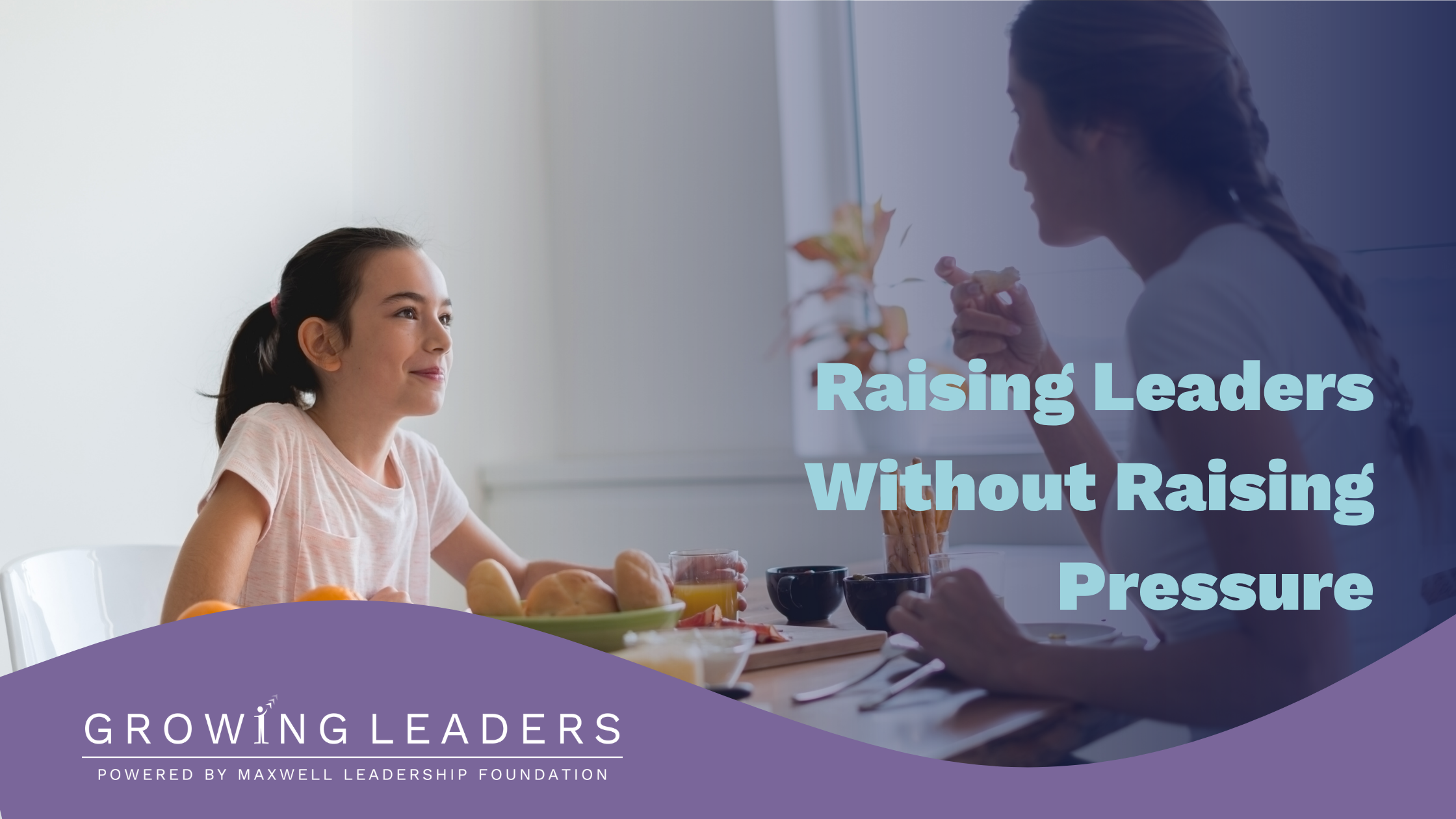
In today’s achievement-driven culture, many parents and educators are in a tight spot. We want young people to lead. We want them to be responsible and resilient and confident. We want them to find out how much they are capable of. But somewhere along the way, leadership development has gotten tangled with pressure.

Students feel it in class. They feel it on the athletic fields. They feel it at home. The unspoken message can be: Do well. Don’t fall behind. Be exceptional.
But leadership is not best cultivated in anxiety-inducing environments. It flourishes in trusted environments

If we want to raise great leaders without pushing them to pressure, then growth and comparison need to be cut out, and responsibility and perfection separated.

Without Anxiety: Building Leadership for All

When leadership is presented as performance, students tend to internalize fear. They come to believe that being a “leader” means being right, knowing what they are doing, “never failing,” and continually outstripping their comrades. That is a mindset that leads to stress, not strength.

Real leadership development is more about behavior than titles. It asks:
Do students learn to make thoughtful decisions?
Are they taking ownership when they fail?
Are they developing empathy and courage?

Leadership is not about getting ahead of everyone else. It is to become better than you were yesterday.

Students relax when adults show time and again that growth is more important than comparison. When students start to relax, they learn.

Calm environments do not produce complacent students. They produce secure ones. Security enables young people to take risks, ask questions, and try difficult things when they aren’t afraid that getting something wrong will define them.

Anxiety shrinks capacity. Encouragement expands it.

Helps Foster Responsibility With No Comparing

Comparison is the fastest way to turn leadership development into pressure.

If students are assessed mainly relative to peers, siblings, or arbitrary benchmarks, they might succeed externally while floundering internally. Some become too competitive. Others withdraw entirely.

Healthy leadership cultures center a sense of personal responsibility over ranking.

Rather than saying, “Why can’t you be more like them?” we inquire, “What would you do next?”
Rather than emphasizing who came in first, we celebrate who got better.
We reward more than visible confidence; we are motivated by quiet courage as well.

Students become responsible when they have meaningful choices. When they have an opportunity to contribute thoughts. When they are entrusted with work that matters.

Little responsibilities — time management, peaceful disagreements, full commitment to actions — build a muscle for leadership over time. These muscles grow stronger through repetition, not pressure.

Adults can model this by:
Assigning projects to students — not just facilitating them.
Allowing time for reflection on past errors.
Rewarding effort, growth, and character over just what went right.
Establishing good and clear expectations, but with supportive warmth too.

When responsibility is viewed as an opportunity, not an obligation, students step into it willingly.

Constructing Confidence with Consistency and Steady Support

Confidence in leadership doesn’t come from a single defining moment. It grows with consistent, steady reinforcement.

Young people need two things at the same time:
You are capable of more.
You are valued as you are.

This balance eliminates entitlement and insecurity equally.

High expectations without affirmation give rise to pressure. If there’s affirmation and growth is optional, potential comes to a standstill. The sweet spot is regular encouragement with modest struggle.

For example:
A teacher might invite a tentative student to contribute one idea in a group discussion instead of leading the class.
A parent may delegate task planning for one family event.
A coach may emphasize effort and learning after a loss rather than just numbers.

These incremental steps relay belief without being overwhelming.

Confidence compounds. Every tiny success adds to an internal layer of strength: I do indeed have this. That belief becomes the basis for greater responsibility later.

Emotionally Safe Leadership Environments: The Power of Emotional Safety

Emotionally safe environments do not remove standards. They eliminate fear.

In emotionally safe homes and classrooms:

Mistakes are talked about and not dramatized.
Feedback is tailored and constructive.
Questions are welcomed.
Effort is noticed.
Character is affirmed.

Students who feel psychologically safe are more likely to:

Take initiative.
Speak up respectfully.
Admit when they need help.
Try again after setbacks.

Ironically, taking pressure off tends to boost performance. As fear is reduced, clarity increases. With less comparison, focus sharpens.

Leadership flourishes when students have enough safety to stretch.

How You Can Foster Growth Without Exacerbating Stress

If you’re a parent, teacher, or mentor, try these real-world changes:

Change from outcome language to growth language. Instead of “You have to win,” ask, “What did you learn?”
Replace comparison with reflection. Rather than “See what they did,” ask, “How would you do it better next time?”
Celebrate character publicly. Highlight perseverance, kindness, responsibility, and integrity as much as achievement.
Normalize imperfection. Share your own learning experiences. Demonstrate how leaders recover.
Provide structured freedom. Offer students options within well-defined limits. Autonomy builds ownership.

When students realize that leadership is about contributing and growing — not being the best all the time — they breathe easier.
And when they breathe easier, they rise higher.

Guiding the Next Generation Without Fear

We do not prepare young people for the future by intensifying pressure. We teach them resilience by training them to be resilient.
Resilience is built through:
Trust.
Opportunity.
Reflection.
Encouragement.
Healthy challenge.
Leadership development needs to be stretching, not stifling.
It is not about building impressive résumés. It is about raising steady humans — men and women who can think clearly under pressure, serve others, care for themselves, and lead responsibly and effectively.

When we elevate leaders and don’t increase pressure, we raise adults who are internally anchored rather than externally driven

And that is the kind of leadership that lasts.

Call to Action

If you need tools, strategies, and insights for creating confident, resilient student leaders — without the inevitable pressure — Subscribe to the NextGen Insider and receive leadership resources designed to help you shape the next generation with confidence and empathy.

“Leadership is not about being ahead of everyone else. It is about becoming better than you were yesterday.”
“When we raise leaders without raising pressure, we cultivate adults who are internally anchored rather than externally driven.”

From One Idea to Global Impact

The stories behind the strategy. See how values-based leadership is creating real, measurable change around the world.

Don’t Miss the Next Ripple

Get leadership insights, impact stories, and updates delivered straight to your inbox.

Scroll to Top

Looking for pricing?

Click the button below, answer a few simple questions and we will email you a price quote for the iLead Student Leadership Curriculum.